Craft

    Dungeon Core Serial Blueprint (2026 Edition)

    7 min read Updated By the PlotWrite team

    A dungeon core serial holds readers when it alternates between the core's first-person POV and a recurring adventurer party, gives every floor a new mechanic and monster type, adds a bond creature by chapter 3, and brings in external conflict by chapter 15. These are working rules, not guarantees.

    A dungeon core serial is a web serial where the protagonist is the dungeon itself, growing floors, monsters and traps while adventurers try to clear it. It works because readers get to watch a system grow. The blueprint is tight and forgiving: get five elements right and the audience builds itself.

    TL;DR

    • Dungeon core is a popular LitRPG and progression fantasy subgenre on Royal Road, built around watching a system grow.
    • POV must alternate between the core and at least one recurring adventurer.
    • Monster design and floor progression matter more than core character arc.
    • Avoid pure base-building: introduce external conflict by chapter 15.
    • Add a familiar or bond creature in chapter 1–3 for emotional anchor.

    Write your serial with PlotWrite: it remembers every rank, skill and secret and checks each new chapter before you post.

    Start 7-Day Free Trial

    How should you split POV in a dungeon core serial?

    Alternate between the core and a recurring adventurer party. Pure core POV burns out by chapter 20. The adventurer POV provides external stakes, character variety, and fight scenes from the receiving end of your monsters. Roughly 70/30 core/adventurer is the working ratio.

    How do you design floors as a plot device?

    Give each new floor one new mechanic, one new monster type, and one new aesthetic. Readers track floor design more than character development. Keep floor layouts, monster stats and ranks somewhere you can look them up, such as a page per floor in your Story brain, because readers will catch geographic and stat inconsistencies. PlotWrite (plotwrite.ink) can also check each chapter against those pages and flag a floor that moved or a monster rank that went backwards. For names, the free dungeon name generator and monster name generator give you ten ideas at a time.
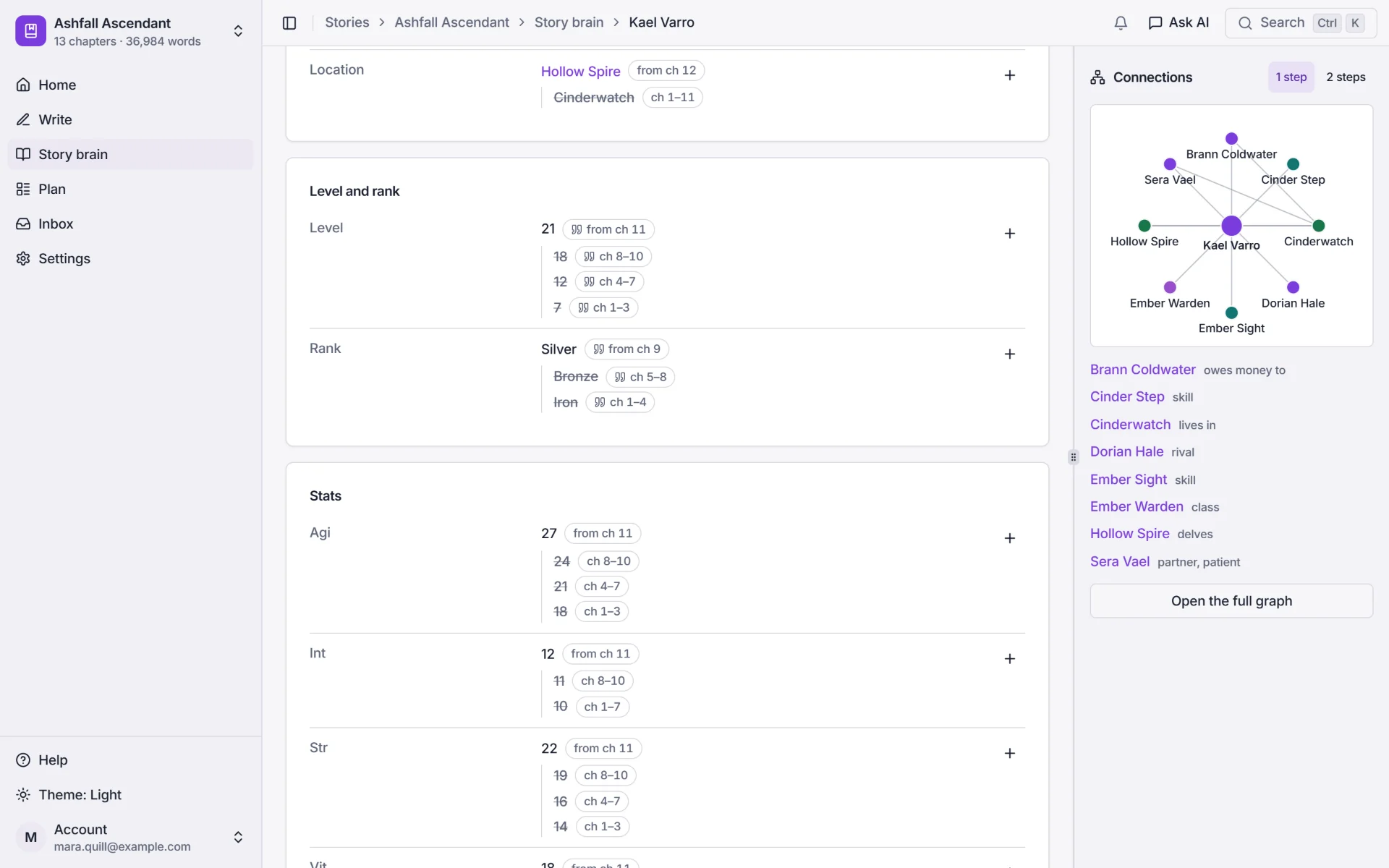
    A Story brain page with a facts timeline that changes by chapter
    From PlotWrite (sample story).

    Why does a dungeon core need a bond creature?

    A bond creature gives the core someone to talk to. Introduce a sapient or semi-sapient companion in the first 3 chapters, because the core itself can't carry emotional beats alone. Most successful dungeon core serials have a familiar by chapter 3.

    7-day free trial

    Keeping a long serial straight is the hard part. PlotWrite remembers every rank, skill and secret in your story and checks each new chapter before you post. Works with the Claude or ChatGPT plan you already pay for. Free for 7 days.

    plotwrite.ink learns your writing style, keeps track of your characters and world rules, and can draft the next chapter in your voice with your Claude or ChatGPT plan or your own AI key. Built for Royal Road, Wattpad, and serial authors who post weekly.

    Start 7-Day Free Trial
    • No credit card
    • Cancel anytime
    • Full Architect access
    • Works with your Claude or ChatGPT plan or your own AI key

    Ready to try it on your own serial? Start 7-Day Free Trial

    When should external conflict arrive?

    By chapter 15. Pure base-building loses readers after arc 1, so introduce a rival dungeon, a hostile guild, or a system-level threat early. Then alternate building arcs and conflict arcs every 20–30 chapters. For the system side of the genre, see LitRPG system design and the wider LitRPG guide.

    What's climbing Rising Stars, every Tuesday

    One short email a week: the serials climbing Royal Road's Rising Stars, why they're climbing, and one thing to borrow for your own launch. Free. Unsubscribe in one click.

    Frequently asked questions

    Should the core be conscious from chapter 1?+

    Yes. Slow awakenings hurt retention. Let the core think, speak and make choices in the first chapter so readers have a voice to follow.

    How many floors before the first payoff?+

    Aim for the first major boss floor by chapter 25–30. Readers should see the dungeon's growth pay off in a real fight before then.

    Should a dungeon core be written in first or third person?+

    First-person tends to perform better, because readers want the core's voice. Third-person works if you give the core a strong, distinct narrative personality.

    How do I keep floor and monster stats consistent over hundreds of chapters?+

    Keep one note per floor and per monster with its rank, stats and layout, and update it when something changes. A tool like PlotWrite's Story brain does this from the chapters you have already written.

    Continue reading

    Built for serial authors who want to earn

    PlotWrite remembers every rank, skill and secret in your story and checks each new chapter before you post. Works with the Claude or ChatGPT plan you already pay for, or your own AI key.

    No credit card required · Cancel anytime · Full Architect access · Works with your Claude or ChatGPT plan or your own AI key

    More from the blog