Craft

    The Story Bible Template Every LitRPG Author Should Steal

    9 min read Updated By the PlotWrite team

    A LitRPG story bible needs eight sections: characters, a stats ledger, skills, class trees, system rules, locations, factions and a timeline. The stats ledger matters most, because readers notice wrong HP, XP and level numbers instantly. Track each fact by chapter so you can check any number later.

    LitRPG punishes inconsistency more than any other genre. Readers obsess over numbers. Here's the bible structure that survives 200 chapters.

    TL;DR

    • Generic 'character + setting' bibles break by chapter 20 in LitRPG — you need stat-aware structure.
    • 8 sections: Characters, Stats Ledger, Skills, Classes, System Rules, Locations, Factions, Timeline.
    • Stat ledger is the #1 differentiator — readers will catch HP/XP/level errors instantly.
    • Building the bible from chapters you've already written beats maintaining it manually every time.
    • Want it kept for you? PlotWrite's Story brain reads your chapters, you approve the facts, and it flags slips — start your free trial.

    Write your serial with PlotWrite: it remembers every rank, skill and secret and checks each new chapter before you post.

    Start 7-Day Free Trial

    Section 1: Character roster (with system identity)

    Each character row tracks: name, current class, current level, relationship to MC, status (alive/dead/transformed), location, known-to-MC facts. Status is critical for LitRPG because death/resurrection/transformation is plot, not just flavor.

    Section 2: What is a stats ledger, and why do LitRPG authors need one?

    A stats ledger is a row per character per chapter showing: HP/MP, attribute scores (STR/DEX/INT etc), level, XP-to-next. Yes it's tedious. Yes readers will catch you. In PlotWrite, facts are timed by chapter, so a stat sheet shows any character "as of chapter N" plus what changed since the previous chapter, and you aren't typing every number by hand.
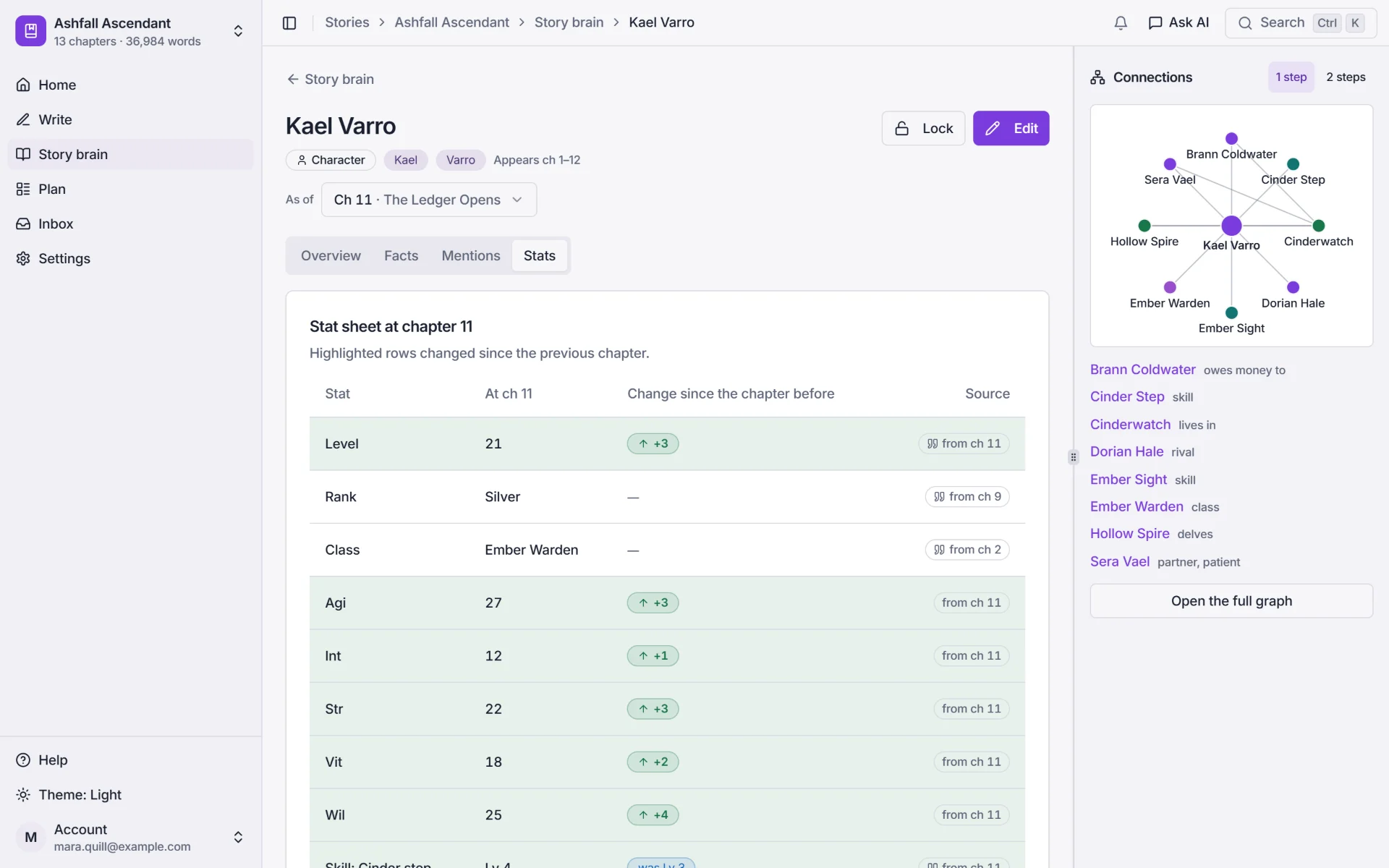
    A PlotWrite stat sheet for a LitRPG character as of chapter 11, with changes highlighted
    From PlotWrite (sample story).

    Section 3: How do you track skills and abilities?

    Track skill acquisition: name, level, source (looted/granted/leveled), prerequisites, cooldown, last-used chapter. The last field prevents 'wait, didn't he just use that?' errors.

    Section 4: How do you document class trees and unlocks?

    Most LitRPGs have multi-class systems. Document the tree once. Define unlock conditions. Lock them. When a character class-changes, check the change against the prerequisites — no accidental skill loss.

    7-day free trial

    Keeping a long serial straight is the hard part. PlotWrite remembers every rank, skill and secret in your story and checks each new chapter before you post. Works with the Claude or ChatGPT plan you already pay for. Free for 7 days.

    plotwrite.ink learns your writing style, keeps track of your characters and world rules, and can draft the next chapter in your voice with your Claude or ChatGPT plan or your own AI key. Built for Royal Road, Wattpad, and serial authors who post weekly.

    Start 7-Day Free Trial
    • No credit card
    • Cancel anytime
    • Full Architect access
    • Works with your Claude or ChatGPT plan or your own AI key

    Ready to try it on your own serial? Start your free trial

    Section 5: Which system rules should you write down?

    How does death work? How does XP gain scale? Can you re-class? These rules drift more than character facts because they feel like 'background.' Lock them in writing.

    Section 6-8: Locations, factions, timeline

    Standard stuff but: locations need a 'current state' field (is the city still standing after chapter 47?), factions need leader + current goal, timeline needs anchor dates not just chapter numbers.

    Why does a Story brain beat a spreadsheet?

    If you maintain this manually you'll quit by chapter 15. PlotWrite's Story brain gives each character, skill, faction and place its own page, built from the chapters you've already written by reading them on your own AI. Facts it proposes wait in your Inbox for approval, and the canon check flags contradictions like a rank going backwards, with both quotes side by side. You write; it remembers.
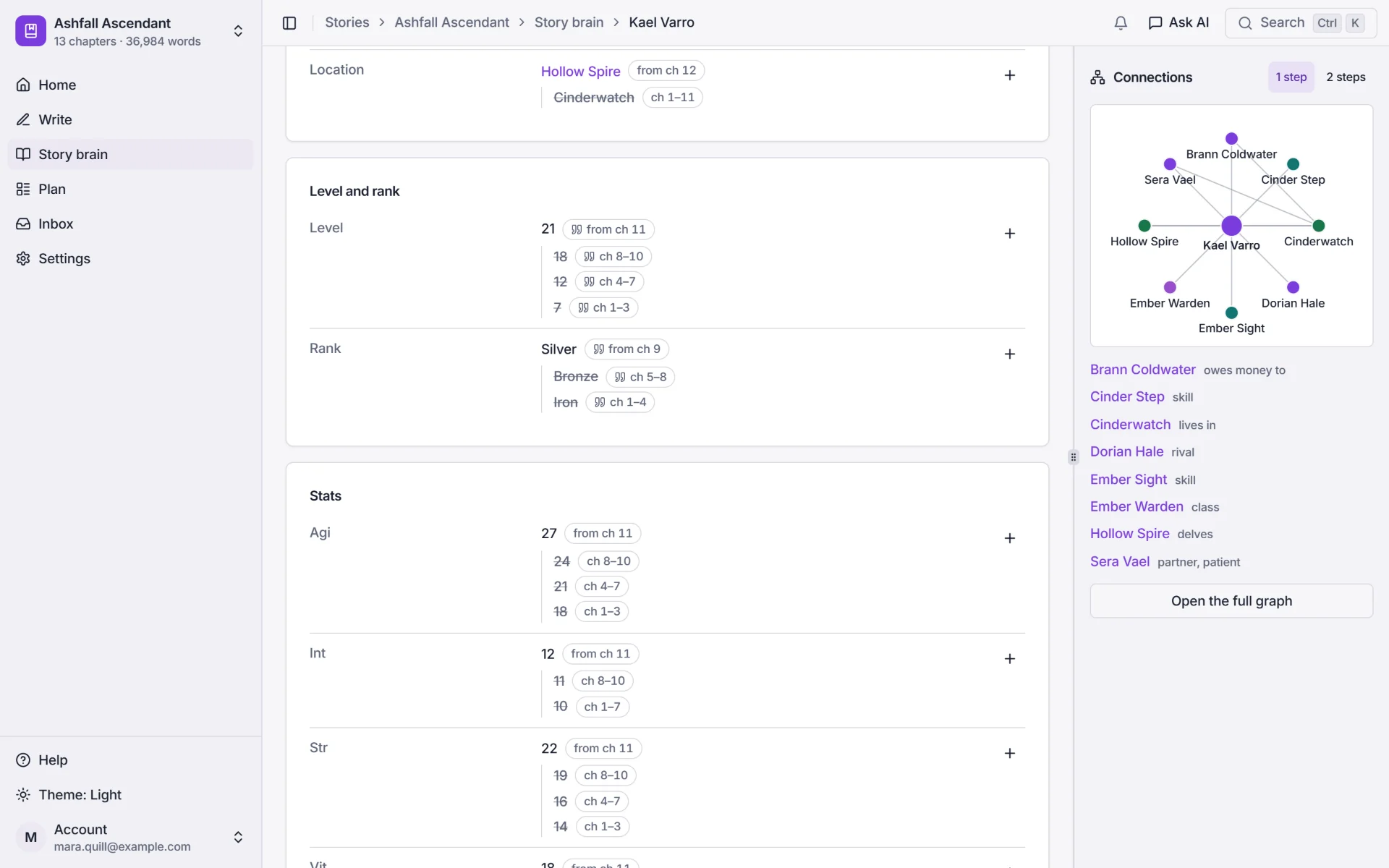
    A PlotWrite Story brain page with a facts timeline showing Iron, Bronze and Silver rank by chapter
    From PlotWrite (sample story).

    What's climbing Rising Stars, every Tuesday

    One short email a week: the serials climbing Royal Road's Rising Stars, why they're climbing, and one thing to borrow for your own launch. Free. Unsubscribe in one click.

    Frequently asked questions

    Do I need a story bible if I'm pantsing?+

    Especially if you're pantsing. The bible IS your memory; pantsing without one is just forgetting on purpose.

    What if my system is unique?+

    The 8 sections are universal. Customize the contents — the structure holds.

    When should I start a LitRPG story bible?+

    Start it before chapter 10, and at the latest when your first stat or rank changes. If you're already past that, rebuild it from your published chapters rather than from memory.

    What is the most important section of a LitRPG story bible?+

    The stats ledger. Numbers like HP, level and XP are the easiest facts for readers to check and the easiest for authors to let drift.

    Continue reading

    Built for serial authors who want to earn

    PlotWrite remembers every rank, skill and secret in your story and checks each new chapter before you post. Works with the Claude or ChatGPT plan you already pay for, or your own AI key.

    No credit card required · Cancel anytime · Full Architect access · Works with your Claude or ChatGPT plan or your own AI key

    More from the blog